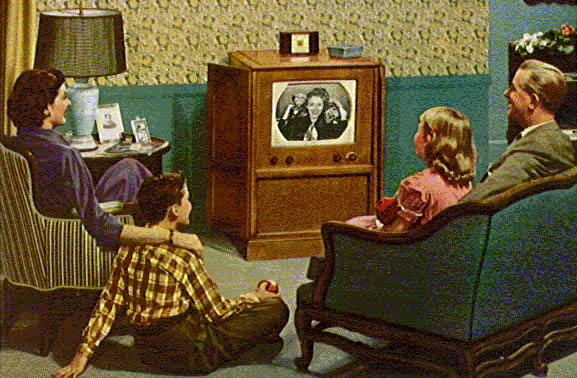
We Need to Unplug the Babysitter

The Babysitter: the personified amalgamation of various mediums we interact with on a daily basis. The Babysitter tells us what to think, what to watch, what to feel, and what’s an appropriate way to go about our lives. It keeps us in check, defining norms and filters through which we dare not stray from. More simply stated, The Babysitter defines our perception of the world for us, all through our TVs, computers, phones, and devices.

tv_watchers

When I was a teen, one of the movies I was fascinated with was the 1996 dark comedy The Cable Guy. The film’s about a guy (Matthew Broderick) who bribes a cable installer (Jim Carrey) to juice him up with free cable. This act is something of a death sentence, as from that point on, “the cable guy” won’t leave Matthew Broderick alone, constantly pestering Broderick to hang out and be friends. Even worse, this cable guy is awkward, irritating, and emotionally unhinged.

What drew me to The Cable Guy, more than anything else, was the film’s ending, in which Jim Carrey has a final showdown with Matthew Broderick atop a satellite dish. In the movie’s last few moments, Carrey confesses why he’s an emotional wreck. He spent his entire childhood in front of the television, learning about the world from sitcom families, broadcast news, commercials, and anything else that glossed across the tube. Real human interaction wasn’t a part of his youth, but carefully cultivated programming was a constant. In essence, The Cable Guy played with the nightmarish fear of what “too much TV” could do to the human mind and brought this fear to dramatic heights.

And I identified with it. I saw so much of Jim Carrey’s anguish in myself — the awkwardness, the obsessiveness with movies and video games. I wasn’t very social as a child, so in turn, I had turned toward cinema as a connection to the outside world. It was warm, charming, and comforting. Nourishing, even.

The problem with relying on media as a source of information, behavior, and culture, however, is that it’s inherently distorted and one-sided. We are at the mercy of the screen, basking in the glow of The Babysitter. And when we start to believe in it, that’s when we find trouble.

Continue reading

Let’s Talk Robots

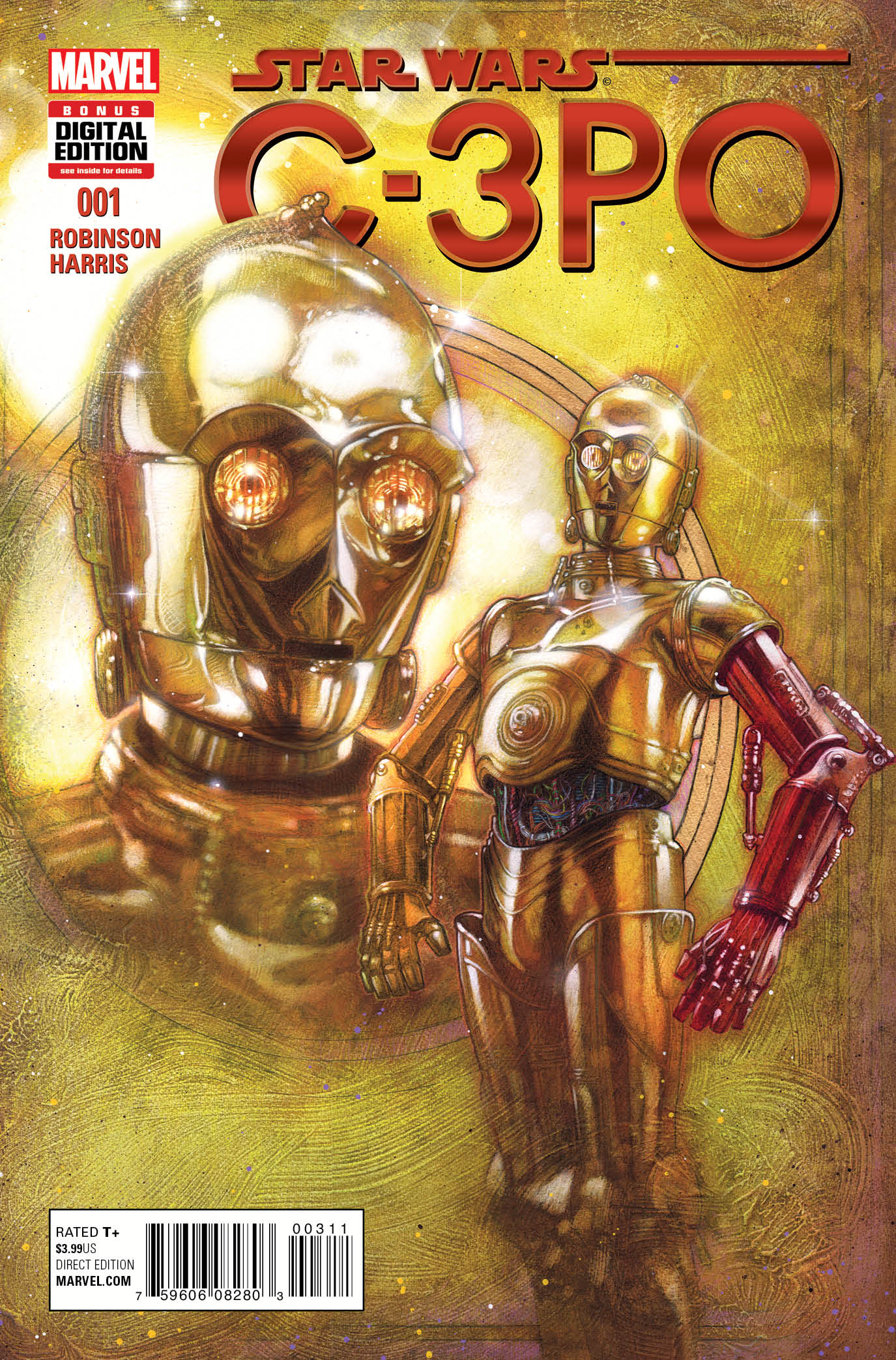
Back on April 13, 2016, I saw a comic book on the shelves that bewildered me. It was a special one-shot for Marvel’s Star Wars line called C-3PO: The Phantom Limband it explained how everyone’s favorite protocol droid acquired his mismatched red arm in Star Wars Episode VII: The Force Awakens. The $4.99 cover price killed any passing interest I may have had, and I imagine, judging by how big that stack of copies was week after week, I wasn’t alone. I mean, it’s C-3PO — who honestly wanted to read a threepio-centric comic book? Let alone pay five bucks for it?

c3po-comic1It made me think though. Some editorial decision was made to tell this tale. Someone convinced a group of executives that people cared about C-3PO, that this one-shot would muster sales. If The Phantom Limb‘s number four slot for April 2016 sales is any indication, that someone wasn’t entirely wrong, either. Sure, it sat on the shelf at the comic shop I frequent, but that doesn’t mean my shop is indicative of the national comic book market. It just means my local comic patrons and I weren’t interested. Why?

Because C-3PO is a 60-year-old protocol droid that was built by a child on a backwater planet.

Think about it. By the time the events of The Force Awakens roll around, Threepio is pushing 60 years of active service, if not more, and he’s still considered useful. That idea doesn’t make sense. As an effective droid, Threepio was outmoded the day he was built by a child. As we see in Star Wars Episode I: The Phantom Menace, little Anakin Skywalker doesn’t have much to work with. The kid’s pretty handy when it comes to building machines, but he’s living as a slave on a backwater planet where everyone trades in hand-me-downs and used tech. There are no factories, no R&D laboratories, and no science facilities on Tatooine. The parts of the planet that aren’t unending stretches of desert populated by moisture farmers, jawas, and sandpeople are nothing more than cutthroat spaceports. Tatooine is so hostile and backwards, the Separatists would rather put a droid factory on Mustafar, a planet that’s really just one gargantuan active volcano.

The point is, C-3PO was never an elite model to begin with, and after 60 years of existence in a galaxy where technology is most likely in a constant state of flux and progression, Threepio never really stood a chance. There are thousands, millions, billions of stores across the expanse of the Star Wars universe packed with newer models that have way better specs than what C-3PO’s packing. They’re also developed by companies and professionals who specialize in robotics. Not kids. So why keep him around? Why not toss that old hunk of junk in the trash?


1

THE BIG FLAW

The big flaw in our thinking when it comes to robots in science fiction epics is that we place too much emphasis on them. Since we don’t have robots as cool as the ones seen in the movies, we think they’re important. But they’re not. Robots are nothing more than glorified smartphones, and in a universe as rich and vibrant as Star Wars, for example, they’re wholly disposable. We see this with the way the Separatists’ droid armies are wantonly slaughtered. The attitude among the Separatist leaders is to keep pushing forward, no matter how many dumb droids it takes. They can always build another one.

When you crack your phone, what happens? You buy another one. When a more powerful laptop comes out, what do you do with the old one? You sell it, toss it, or donate it. These machines hold no sentimental value for us, and as soon as they stop performing at peak efficiency, we get rid of them.  Part of this is due to how our society works. When a new piece of technology comes out, it starts off super expensive, but as more companies try to duplicate it and as our ability to cheaply and affordably build it improves, the market price drops. It becomes second-nature to just go out and purchase a new one. We don’t stop to think about all of the good adventures, fun nights, or memorable moments we shared with those devices. The outdated nature of the technology overrides any connection we may feel. Why would robots be any different?

One movie that takes this idea to heart is I, Robot. In the film, there are robots everywhere, many of which are performing the menial labors we can no longer be bothered with (like walking the dog or taking out the trash). When a new model rolls out, the older ones are dumped into a shipping crate somewhere and forgotten about. Out of sight, out of mind. It’s a cruel sentiment, especially since the machines in I, Robot sport human-looking faces, but it’s one we collectively share every single day.

Let me ask you something. What happened to your first iPod?

Continue reading

A Breakup Letter to DCEU

SuicideSkwad

© 2016 Warner Bros. Entertainment, Inc.

Dear DC Extended Universe,

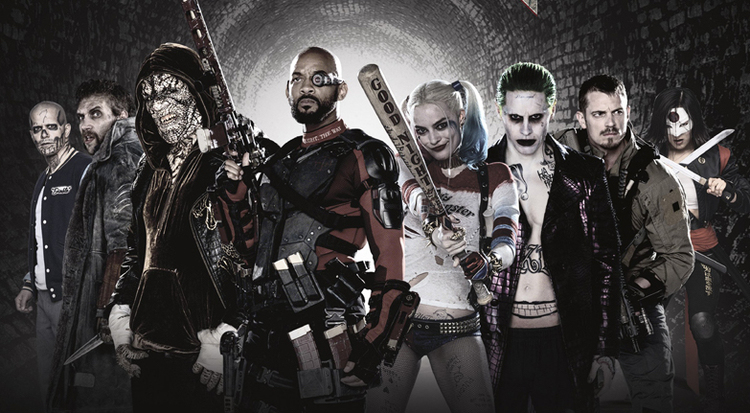
I saw Suicide Squad this past weekend, and I just want to say, I can’t do it anymore. The movie, like the sum of all of your parts, is lacking. You’re a Frankenstein’s monster stuffed with malformed chunks of ideas (some good, some bad) hastily stapled, sewn and taped together, and though your arms are open and eager to hug moviegoers, the stench of hollow storytelling is too pungent to embrace. It leaves me heartbroken. As a comic book geek, as a fan of DC and as a lover of cinema, I — we — can’t be seen together any longer.

We’re just too different. I’m a living, breathing person, and you’re, well, dead. I hadn’t realized it until now, but I think you were deceased before we had even been properly introduced. Your friend, Zack, must have diluted the smell with body spray while he distracted me with flashy movements. I thought it was erratic and bizarre at first. Even the second time around, I gave Zack the benefit of the doubt when he said your body was sagging and coming undone because you needed an extra 30 minutes to recuperate after a long day at the office. But this?

I drew the line when your buddy Jared came over and used my favorite Batman comic books for toilet paper. His friends, Will, Margot, Viola, Cara and even Jai, were okay, but that Trailer Park outfit you were dressed in when you all walked in was too unbecoming. Too much jewelry and not enough substance. It didn’t hide the lacerations in your flesh. When your innards slid through the stitching and crumpled to the floor within the first ten minutes, that’s when it dawned on me. I glanced at Jared, who had drawn a mouth over his mouth for some reason, and I knew we didn’t belong together. You weren’t simply in need of “more time” to recuperate. You needed something only an undertaker could provide — everlasting peace.

I’m not saying this is good-bye forever. As any self-respecting comic book fan knows, death isn’t a permanent state. I’ll also still be over for family gatherings, and I still plan on visiting your brother, DC Comics, every Wednesday for our usual hangout. But us? This weird relationship we’ve gotten ourselves into?

It’s too painful. I didn’t mind you rummaging into my wallet every couple of months for a few bucks, but each time we’ve hung out, the cuts have been slicing deeper and deeper. It’s only a matter of time before you kill me. Suicide Squad was too close to the heart, and I have to call it quits. I’m sorry. I really wish it could have worked out. For a while, I was even willing to let the whole “Martha” thing go. Not anymore.

Goodnight, sweet prince.

phantasm-capture

© Warner Bros. Entertainment, Inc.

On Politics

DonaldTrump

Some thoughts on the impending 2016 election that I originally posted on someone else’s comment thread. Take them as you will, as this will likely be one of the few times I’ll open up about the subject.


Every four (hell, even two) years the world is always at stake, and if you vote outside of either of the two parties, you’ll have friends on either side telling you that the “blood of the election” is on your hands, even though you decided to vote for someone who wasn’t into drone-bombing foreign nations or stripping away more civil liberties. It never fails.

And they’ll badger you. They’ll berate you. They’ll call you names. The only solace you’ll have is that you decided, for maybe only once in your life, to make a conscious decision not based on fear of “the other guy,” not based on the twisted, mind-numbing game of back-and-forth oozing from partisan television stations on an hourly basis. Perhaps only for a minute, you did something out of inspiration, love and empowerment, and it felt amazing to make a choice positively, instead of negatively.

In the coming months, do what makes you feel human.

Conviction

writer-605764_960_720

Whenever there are dirty dishes in the sink, I get that itch. You know the one. It’s that unsettling desire to clean and disperse the dishware. This itch translates to empty cups or bottles in the living room, to my own clothes strewn anywhere outside of the laundry basket. It applies to all manner of house, car and life chores. It feels good, too, satisfying that itch. It’s akin to being productive, to accomplishing something worthwhile.

But it’s not worthwhile. I just washed the damn dishes. Who cares? There will be another batch tomorrow and even more the day after. Completing a chore is not productivity. It’s just participating in another battle in a never-ending war on grease spots. Those good vibes that come with securing the sink perimeter are just an illusion to take me away from my real task: writing.

That’s the real battle. You want to be successful at this? You want this to someday be your bread and butter? You need to write every single day, and I haven’t been. I find chores to overcome. I socialize, watch TV, play video games even. When I sit down at the writing desk, I excuse myself to make sure the next issue of Literary Orphans is coming together smoothly.

Rest assured, we’ve got a great team over LO, so the magazine is fine. It just needs a little bit of maintenance every now and then, like sorting through Submittable, e-mailing authors and making sure the hackers haven’t plowed through LO’s defenses.

Hell, I infrequently update the home site, as you can probably tell. It’s been more like a dumping ground these past few months and less like a beacon of activity. I’d tell myself I’m working on it, but there’s also that realization that said comment is pacifying in nature.

A few weeks back, we had a problem with our freezer at casa de Waldyn. We had someone who knew appliances head over to fix our problem. It took him, Mike, a few hours, but he managed to solve our internal drainage issue. Afterward, Mike and I talked for a little bit — about society, people, politics. He was a pretty smart, thoughtful guy, but before he left, he brought the conversation back around to the reason he was over in the first place. That damn freezer. It was a difficult one, one of the trickier jobs he’s had, and he suspected we were delayed in getting it fixed.

Mike offered some life advice that seemed like a no-brainer statement at first. He said, “If you see a problem, it’s better to take care of it right away. Don’t sit on it. It’s only going to get worse.”

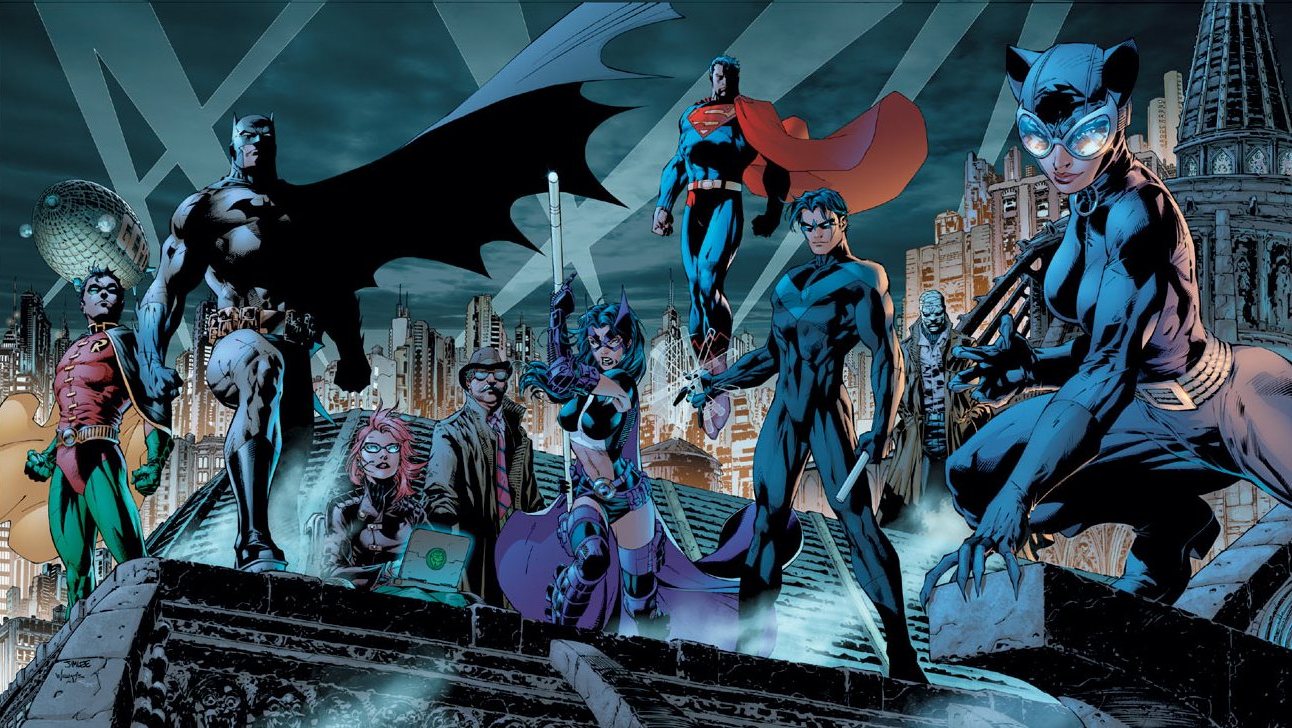
Those words stuck with me. They seemed so simple, but there was a broad application for them. As I thought about them more and more, I began to apply them to other areas of my life. Then it hit me. My writing was the problem. Every chance I got, I found a way to walk away from my writing. Dishes. Literary Orphans. A burnt-out lightbulb. Anything. And then I thought about how I’m not just writing for myself anymore, how I have a wife now and how we’re talking about building a family. It isn’t just me anymore; it isn’t just Batman in his Batcave. It’s us; it’s a greater Bat family.

Batman_Family_0004

I’ve done some analyzing of my writing in the past week or so, and I’ve realized one important key: I’m way too easily distracted by the Internet. This is a common problem many writers struggle with, and to curb this penchant for prowling the web, I’ve gone back to writing everything out by hand, first. So far, I’ve already written out a draft of a short story and begun a new novel. In one week, I’ve conceptualized an interesting, fresh concept for a sci-fi book and written two chapters. These aren’t skeletal frameworks. These are honest-to-goodness, real, genuine chapters (they could probably use some major editing though).

The change seems to be working, but it’s on me, on us, on you, the readers, to understand the real problems we’re all succumbing to. The more we find loopholes of productivity to avoid writing, the greater our struggles will become and the less likely we’ll ever be able to Chuck Yeager that writing barrier. This is our exit window, and it’s closing ever-so-slowly as the days go by.

Let’s help each other stay committed. Tweet me, and I’ll tweet you. We can do this.
(Admittedly, that may be too damn peppy, but you get the gist.)

Motivation

motivation

When I write, I write for me. I write for fun. I write for entertainment and peace of mind. It’s satisfying, and the act of writing helps keep me sane.

But writing for an audience of one isn’t good enough. It’s selfish, and it isn’t the motivator I need to keep at it consistently, instead of writing when I “have the time” or “just for fun.” Simply put, if I stay the course, I’ll never go anywhere with it.

This hit me today while driving to work. The theme song to that movie Ben shuffled onto my iPod—a very young Michael Jackson’s voice stirring something deep within my soul. I watched that movie only once, in fifth grade, because our teacher put it on. I don’t remember why. I just remember it was about some lonely child befriending Ben, the leader of an army of rats on the advance into town. Their friendship was one of those relationships doomed from the start, as they came from two worlds at odds with each other. Ben’s rats killed humans. Humans killed Ben’s rats. Even though forces were at work to tear them apart, Ben and the boy’s friendship endured.

The movie is probably terrible now that I’m older,  but it’s the sentiment that counts. The memory. I’m reminded of it whenever that song shuffles on. And every time, I think of my loved ones.

I’ll be married in two months to an amazing woman. Eventually, the two of us will have a family of our own. So who am I writing for?

I can’t keep writing for me.

The ability to write is a gift. It’s a craft we, as “writers,” chip away at. Some of us are more obsessive about it than others, and the more we hone the skill, the better we become. It’s our special tool, and it’s completely wasted when exclusively used for the self. The one. The individual.

I want to use it to better my family.

I want to write, so I can use my tool, my gift, to put food on the table. I want to take this gift and give my family the best possible future. The idea that this is greater than myself makes it harder for pen to leave paper. The thought of providing, of using this talent for the benefit of my loved ones, inspires something more important than leisure. It inspires duty. Necessity. Devotion.

Writers often say one can’t go into writing for the money. I agree. It’s a very risky business. The odds of profitability are stacked against the individual, and more often than not, we may be left writing things that don’t interest us even when we succeed.

But very few enjoy the tedious monotony of work, so why not spin the barrel of the gun and play Russian roulette with our gifts anyway? We can take the chance. The more devoted we are, the better our odds will be. With devotion, dedication and drive, we’re betting on the house, our house, to win.
//platform.linkedin.com/in.js

Poor Jud Is Dead

Okies

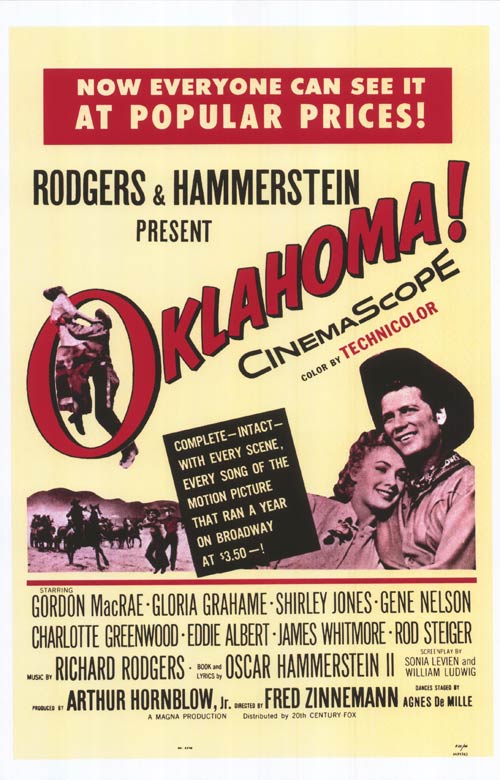
When the throes of campaign season are upon us, I’m often reminded of a musical I tend to strongly dislike. It’s called Oklahoma!, and it’s about the struggle over the source of two men’s affections, Laurey Williams. It’s considered a classic, written by the famous musical dynamic duo of Richard Rogers and Oscar Hammerstein II, and I dislike it because I can’t stand the protagonist, Curley McLain. He’s the all-American meathead asshole. He’s boisterous, self-aggrandizing, outspoken and selfish, evident by a scene where he tries to remove his competition for Laurey by trying to convince the other party (Jud Fry) to hang himself.

But everybody loves Curly. Every person in town (except Jud) sings Curly’s praises, and yet, as an audience, we don’t see Curly do much beyond puffing his own chest. Jud, on the other hand, is cast as the roadblock to everything Curly wants and the main antagonist. Jud’s crime? He’s a loner weirdo who lives on the outskirts, and nobody likes him. This breeds obsession in Jud to protect what’s his, and it drives him to act erratically and ultimately violently when the woman of his dreams switches sides and joins team McLain.

Oklahoma! is a simple story we’ve seen played out over and over again. The “good guy” overcomes the “bad guy” and saves the girl. Everybody in town cheers, not really bothered that it took someone’s death to resolve the plot. And since it’s a musical, people break into well-choreographed bouts of plot-driven dancing.

Ok1When I first saw Oklahoma!, I didn’t necessarily like what I watched, but there was something about it that embedded it deep within my brain. It was the Jud character. In the production I saw, Jud was a tall, tubby oaf. He looked like a walking egg, and he dressed in what appeared to be burlap sacks. These were our cues to join the townspeople in hating him, and these were the reasons we had to suspend our judgment when Curly took the coward’s road in trying to convince Jud to hang himself, thereby securing an indirect route to freeing up Laurey as a partner at the local dance.  It was a heavy-handed tactic for such a petty end result, but Jud was the burlap sack-wearing oaf, so…

Nobody thought Curly bad or wrong or evil for his promotion of suicide. None of townsfolk rethought their support for everyone’s favorite cowboy. It was a strange experience for me, and sitting in the audience, I couldn’t help but balk at some of my fellow attendees who were cheering for Curly. And near the end, when Jud turns violent, the exultations of joy emitting from my fellow attendees reached a crescendo.

“See?!” they cried. “Jud IS the bad guy!”

Though strange as this experience was for me, it’s not entirely out of the ordinary. In fact, it’s a very human thing to do and is something we do all of the time.

Think about it. More often than not, we create our own enemies. When we consolidate into exclusionary groups, when we chastise people for differing politic opinions or lifestyles or interests, we’re pushing Juds to the far reaches of society. We’re fueling the fire, piecing together ticking time-bombs who will own venture deeper and deeper into that black abyss we claim to stand firmly against.

I see it often around election season on Facebook. I see it in the comment sections of topical news stories. I see it in public when people are waiting in line to see a movie. People gang up on each other, some choosing to even to go so far as to publicly shame the person they were having a heated argument with. Though we might feel “right” because our values are reinforced by our friends, family or that one Salon.com article that agrees with us, doing these things aren’t exactly helping us. Even if we’re reacting to a fight we didn’t start.

At the end of the day, these battles are dividing us. They’re pitting us against ourselves, pocketing us into exclusionary groups that can be easily marketed to. Who wins when the town has been gerrymandered into cliques too busy with ousting one another over bullshit Facebook trends? Unscrupulous, silver-tongued opportunists with something to sell. Self-indulgent Curlys not beholden to any one group or way of life.

If someone in town brought a bottle of whiskey to Jud’s shack with the offer of simply hanging out, Oklahoma! might not have ended the way it did. The musical certainly didn’t need to end violently. It was only a date to a dance, after all.

As a species, I often feel that we’re getting better at being human, that we’re evolving. I’m an optimist like that, and I hope that one day I’ll see an adaptation of Oklahoma! that doesn’t end with one person trying to knife the other, that the townspeople learn their lesson and discover a way to break bread with that loner weirdo on the outskirts of town.

I won’t hold my breath for Curly realizing he’s an asshole, though.  I won’t hold my breath for finally liking Oklahoma!, either.
//platform.linkedin.com/in.js
I, For One, Welcome Our Board Game Overlords

KentBrockman

There’s an epidemic spreading among the masses. It’s a plague with no physical symptoms. It carries no sores, no bruises, and no discoloration. It doesn’t make anybody stuffy, irritated, or drowsy. This disease works stealthily, hopping from one person to another, invisible to the naked human eye. The only sure-tell way to identify this sickness is when it’s too late. It’s when the epidemic has your friends, your coworkers, and your family locked down, submerged into a full-blown breakout with no way out.


Even then, I only know because they tell me. These loved ones finally feel the illness worming its way through their systems, and when it has made its way to their hearts, they lean in real close, their glossy eyes a snapshot of terror, and they whisper, “I don’t know how to tell you, but I’ve traded in my thumbs.”


“Your thumbs?”


“My thumbs. Both of them. I ain’t the jockey I used to be, brother. I feel different.”


It’s happened so many times, I don’t blink anymore. I just ask them to hit me with it. Straight.


“You ever play Settlers of Catan?”


Several years ago, I never thought board games would rise up and challenge video games. The idea seemed silly. What were board games? Monopoly? Sorry? Battleship? Checkers? These were mildly entertaining bonding activities simple enough that even Grandma could participate. These were toys for family parties, a means to pass the time without turning on the TV, and in that, board games were as cool as they were exciting.


But then something happened in the early 2010s that changed everything. A staple from my youth started to die out. What once was vogue in the world of video gaming became archaic. It was slapped with a label and lost in most modern games, relegated to a cultural motif of yesteryear. They call it “couch co-op” or “couch multiplayer” these days. It’s the notion of inviting friends over to game, sitting next to each other in the same room, and either working together or challenging each other through split screens on the TV.

Continue reading

In Memory Of James Horner

[James Horner, composer of countless iconic movie scores, died in a plane crash yesterday. I wrote a reflection piece about his body of work and the way his music has touched me on a personal level.]

I first discovered the name ‘James Horner’ in 1993. I was small and just starting to read, but his name scrolled across the screen during a viewing of The Land Before Time, a favorite film at that time. I couldn’t help but take notice, as I was receiving a film education early, from a father who loved to dissect the working pieces in order showcase and share the many components that made a movie such a mystifying, magical, and surreal art form. One of the elements he zeroed in on was the power of music. He’d blare it from the speakers when my mother went out some nights. My father would play movies in the other room when he made dinner, just so he could hear the sounds…

…because the film’s visuals were already firmly implanted in his mind, and by listening to the music, he could relive the story again.


The Land Before Time became one of the first film score obsessions I’d carry with me. I’d watch the movie constantly, sometimes putting it on in the background while I played with toys. The music hit all the right notes — adventure, terror, courage, curiosity, birth, death, and the breath of wonder of a world around us that was magical and new. In moments of doubt, when the burden of my parents’ divorce weighed heavily on my mind, The Land Before Time was a score that even promised hope, that asked me to endure and climb over the mountain to see what was on the other side. There was a whole world out there, and though the one I was familiar with was crumbling, a new landscape was on the horizon. Always.

Continue reading

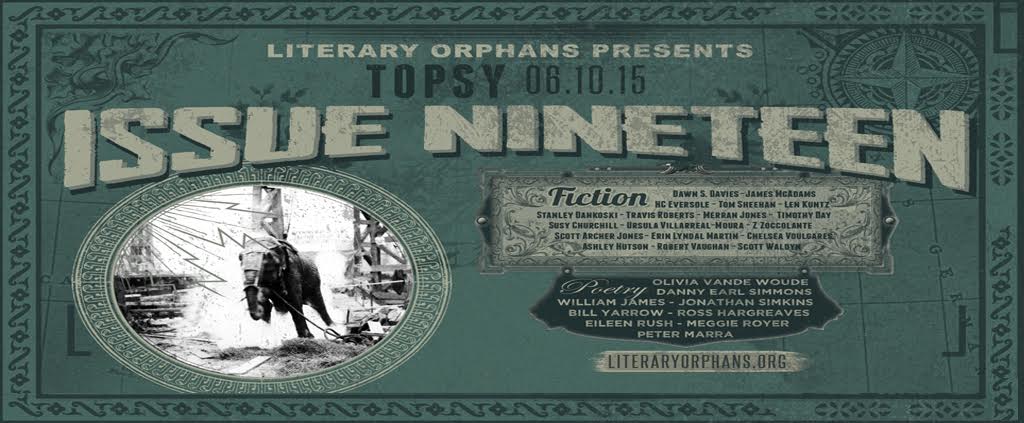
LITERARY ORPHANS ISSUE 19: Letter From The Editor [Reprint]

This Letter From The Editor was originally printed in the latest issue of Literary Orphans on June 10, 2015. It’s my debut as editor-in-chief of the journal, finally coming out of the shadows and getting a little more hands-on with LO. If you follow me and haven’t checked it out, I’d heavily recommend it. Not just because I’m involved. If you read the letter, you’ll see that I intend for it to be something greater than myself, something greater than all of us.

I’ve decided to reprint the letter on my personal site because of all the outpouring of support I’ve gotten for it. I was worried it wouldn’t fly, but people love it. One commentator even said it was reminiscent of Thomas Paine. The comparison made me blush.


blurred-Topsy-1024x728

Dear Orphans & Orphanettes,

When Executive Director Mike Joyce asked me to steer the Literary Orphans ship, I’ll admit, a sense of worry washed over me. Apocalyptic visions of cities crumbling to their foundations rattled me. I had memories of movies I had seen where all that stood of civilization was a weathered Big Ben jutting out of a pile of rubble. Mike was doing a great job, and the last thing I wanted to do was come in like a bumbling lab assistant and mix up the formula.

So I dipped into the LO ether. I revisited our earliest notes three years ago, back when LO was a mere thought, and imbibed those ambitions. I poured through old “Letters From The Editor,” starting with the very first one in Literary Orphans Issue 1: Babe. At times, my journey felt like being reintroduced to an old friend, and at other times, it felt like I had seen a ghost, as if I were viewing stills of a past incarnation no longer with us. It’s true that LO has gone through changes, many of which were cosmetic, but the same heart still beats at its core. It just looks different. The journal has grown into new clothes.

In my many notes I passed back and forth with Mike, one of the constants was this idea of Literary Orphans as a media identity. What were we? Were we a counterculture outfit? Were we a haven for the disenfranchised? Were we the explorers that sailed against the winds?

Continue reading