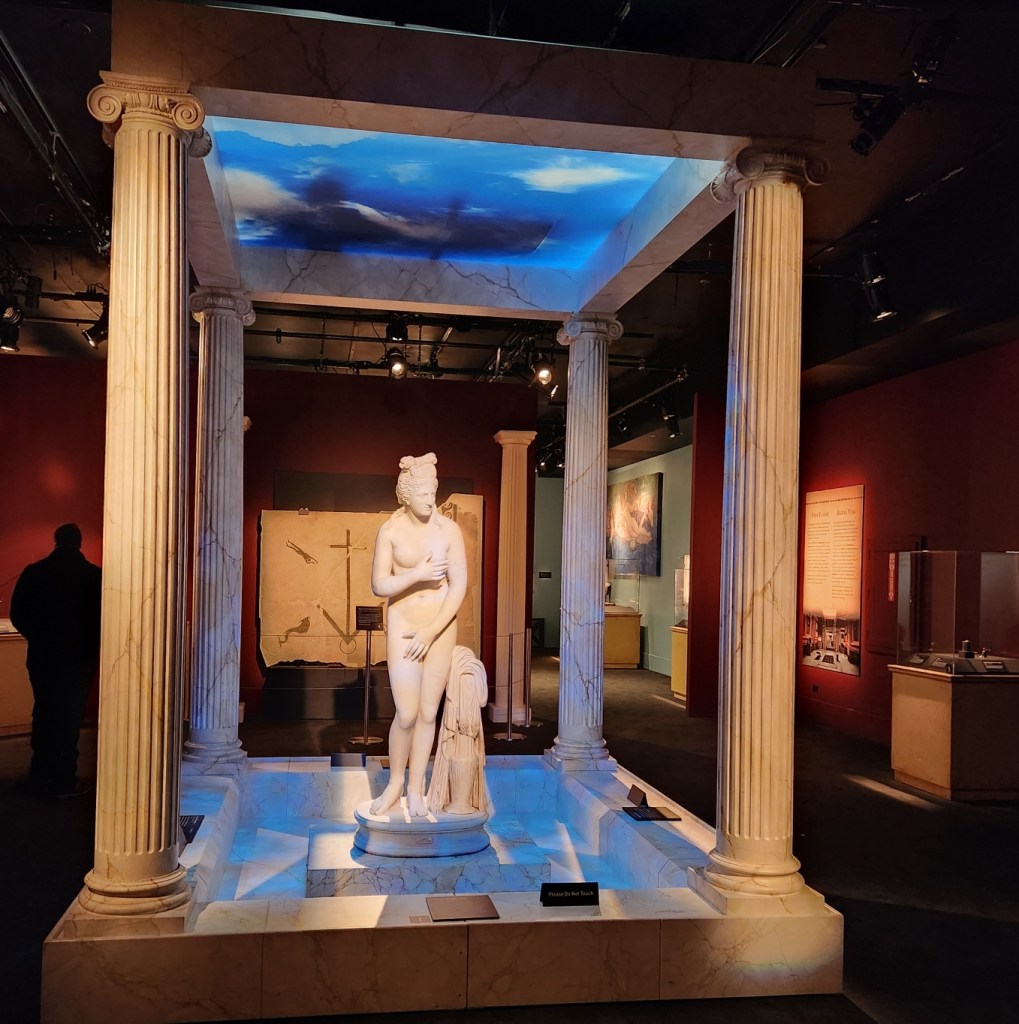
My wife and I recently explored an exhibit on Pompeii at the Museum of Science & Industry in Chicago. It was fascinating, broken up into two parts: What we know of Pompeii before Mt. Vesuvius’ eruption and the aftermath.
The artifacts on display were beautiful, paired with reproductions that simulated life at the time. The first half of the exhibit walked through Pompeii as a port city that flourished from the export of garum (a fish salt used in everything).
Because it’s the Museum of Science of Industry, there was focus on ancient Roman architecture and how thoughtfully designed it was. For those who don’t know, much of what we know about ancient Roman life also comes from the archaeological exploration of Pompeii’s ruins.
Leading into the second-half of the exhibit, there was a simulation of Mt. Vesuvius’ eruption, with time stamps detailing the waves the emanated from the volcano within a 24-hour period, and how it buried Pompeii with toxic gas, ash, and debris. The plaster casts made from holes in the solidified rock where bodies once were are what remains of the city’s people. Each one is mortifying. On some, you can even see faces preserved in anguish and horror.
The discovery of Pompeii influenced the creation of the field of archaeology. From this tragedy, this city literally buried and wiped off from the face of the planet, much was preserved for study centuries later.
What resonated with me most was how similar society seemed. Styles, technology, and architecture were different, but daily Pompeiians went about their business like we do. They ate out, put up pictures on the wall, socialized with a shared bottle, shopped at the weekly market on the public square, littered buildings with graffiti, and let the dog out into the yard. Irate citizens carved bad reviews into the walls of public buildings. Wealthy business owners lived in ancient McMansions while lower income Pompeiians lived in apartment-style dwellings.
Like any society before or since, they dreamed and created works of art – both beautiful frescoes for public display and lurid paintings for brothels and secret kink rooms. As I said before, style, technology, and architecture changed, but humanity has remained humanity.
We evolve. Our laws tend to arc more humanistic, but that need for human connection remains the same. We love to socialize, to share our top ten lists or let others know when takeout was subpar. The public square, forum, townhall, or whatever we want to call it, will always be there in some form, whether that’s digital or concrete.
It’s integral to us, and we are who we are. We see the same themes come up in our stories over and over again. Themes like greed, love, passion, and desires for acceptance and liberty are timeless.
I suppose it says a lot that a good chunk of the exhibit focused on daily life, and it says even more that I fixated on the similarities, the human connection through time. What happened to Pompeii was tragic and devastating, and maybe that sense of loss is amplified by understanding the little things that make up humanity, the needs, wants, and desires.
 Scott Waldyn Writes